Loading...


Then the week fills up with clients, staff and delivery — and a proper 90-day cash flow forecast stays on the “eventually” list.
Then a slow month hits. A large invoice lands late. A surprise cost appears. A position that felt comfortable starts to look thin.
That happens to businesses that are profitable on paper: solid revenue, decent margins, happy customers — and still tight on payroll week. The business isn’t always the problem. Financial uncertainty is. They can’t see the next 90 days clearly.
A forecast you trust doesn’t only show cash today. It shows where cash is heading, early enough to act. That 90-day visibility is the core of cash flow planning — and of Bettercosts’ Predictable Profit Planning.
This guide is how to build one you’ll actually use.
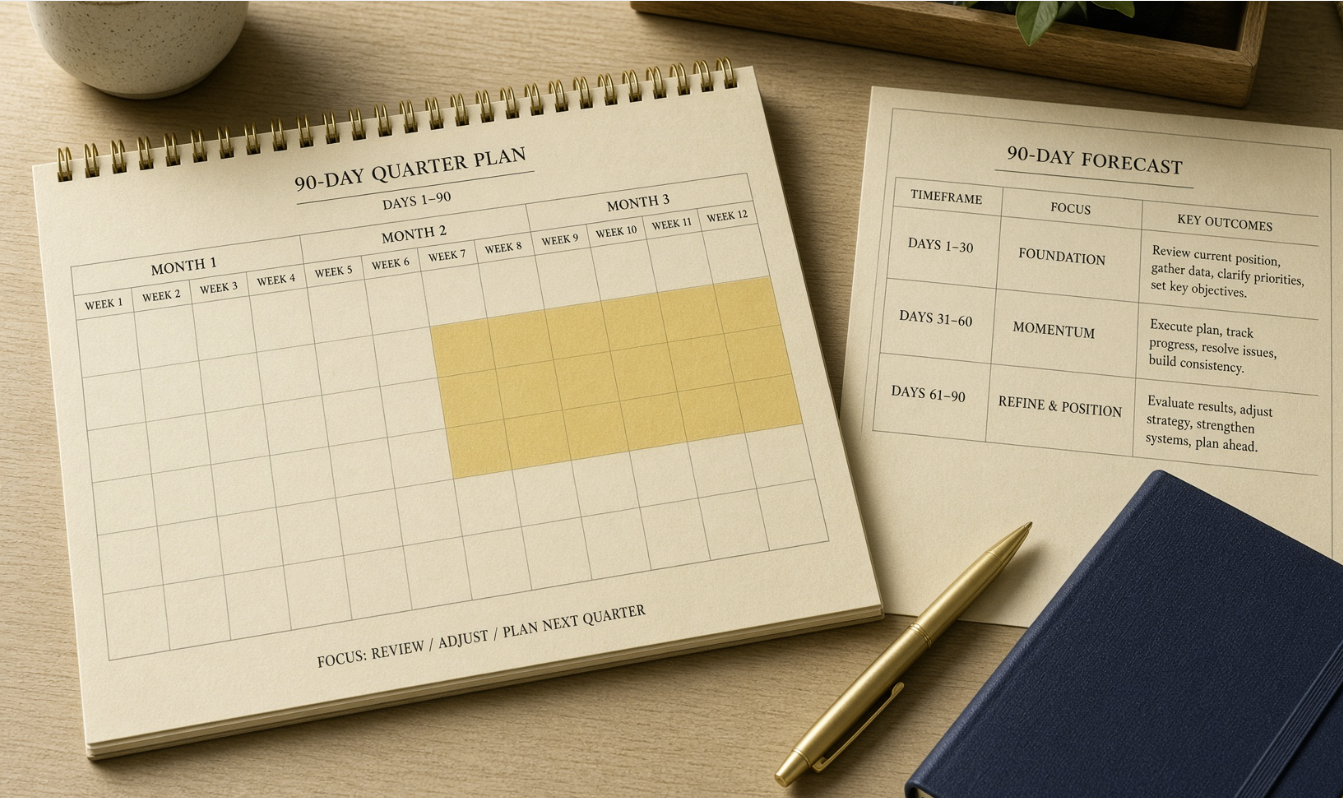
Thirty days is useful for day-to-day business cash flow management, but it’s short runway. By the time you see a problem, you often can’t hire, buy equipment or take on a large job with confidence.
Twelve months is useful for annual planning, but it’s built on assumptions. The further out you go, the softer the numbers.
Ninety days sits in the middle. Close enough to rest on real invoices, real costs and real payment habits. Far enough to respond. For most businesses it matches how you already think: a quarter.
90 days gives you the visibility to act, not just react.
What you can realistically see
That’s enough to decide whether you can hire, whether to chase debtors this week, or whether to speak to the bank before the account is tight. That’s forecasting for growth, not only defence.

Use cash you can actually spend today — not a figure that looks like cash.
Don’t treat uncollected invoices as money in the bank. Don’t ignore payments you’ve already sent that haven’t cleared. Don’t mix every account without being clear what’s operating cash and what’s earmarked.
Include
Don’t mix in: overdraft or credit limits. That’s borrowing capacity, not cash on hand. Mixing them makes the position look safer than it is.
Best source: the bank app or statement, not an unreconciled balance in Xero or MYOB. Update the bank feed and reconcile first. An unreconciled figure is noise.

“Expect” means what you have reason to believe will land — not what you hope will land.
Confirmed invoices already issued
Use the aged receivables list. For each invoice, estimate when money will hit the account, based on that customer — not only the due date.
This step alone often surfaces invoices you’d written off mentally, or a large receipt you’d forgotten.
Expected new revenue
Leave the “hopeful” proposal out, only facts in the base forecast.
Other inflows
Loan drawdowns already arranged, GST credits or tax refunds, one-off asset sales.
Big fixed costs are easy to remember. Variable and irregular costs are what break a forecast.
Record when money leaves the bank, not when the expense hits the P&L. A bill incurred in week one may not clear until week three.
Fixed and recurring
Rent, wages (including yours if you pay yourself regularly), super (should now be the same date as payroll), loan repayments, software, insurance, phone and internet, equipment or vehicle leases.
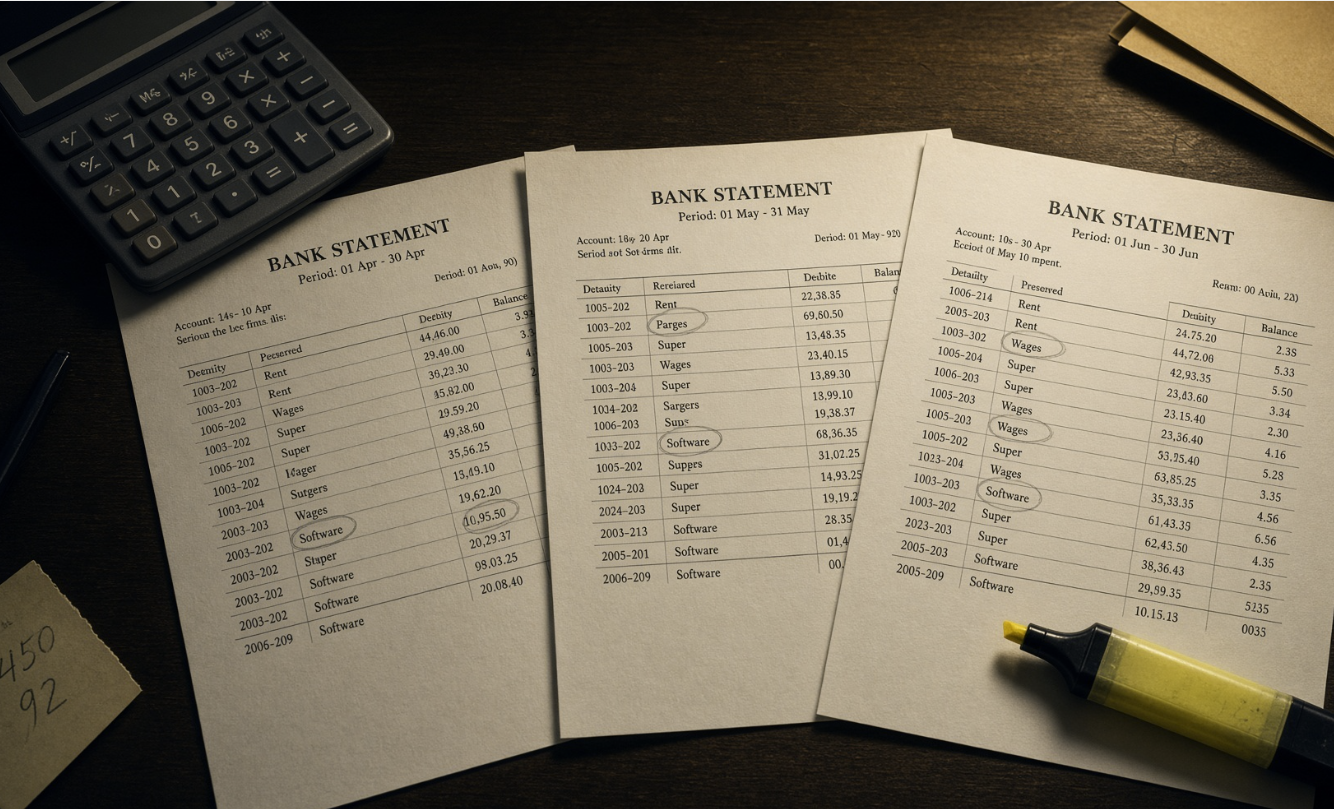
Highlight every recurring line on the last three bank statements. You’ll find a few you’d forgotten — the same overlooked business expenses that show up in an outgoing analysis.
Variable
Cost of goods, subcontractors, freight, commissions. Use last quarter as a percentage of revenue if that ratio has been stable.
Irregular and one-off
Quarterly or annual renewals, the next BAS, PAYG instalments, payroll tax, planned equipment, campaigns, accounting or legal fees, training.
Check the calendar, email and purchase orders: What have I already agreed to spend in the next 90 days that isn’t on this list?
A simple spreadsheet is enough. Building it once yourself is useful — you see where every number comes from. You don’t need specialist SME finance tools on day one.
Monthly buckets (three columns) are easier to start with. They can hide a mid-month crunch.
Weekly buckets (13 columns) show timing. If you’ve ever had a “good month” and still run short mid-month, weekly is the better view. That’s a rolling 13-week cash flow forecast.
Each period needs:
Closing balance becomes the next opening balance. That running figure is the one that matters.
Simple monthly layout (example) You will see that month 2 draws cash down. Knowing that early means you can chase invoices, delay a discretionary buy, or use a facility on purpose — not in a rush.

One forecast is useful. Three provides flexibility
Best case — a large invoice lands early; a confirmed job invoices sooner.
Base case — what you genuinely expect.
Worst case — two key clients pay 30 days late; a job slips; a retainer ends.
If worst case still leaves a workable balance, you’re in decent shape. If it wipes the account, you need a buffer or a facility before you need it.
The goal isn’t to predict the future. It’s to avoid being blindsided by it.
That modelling is what Predictable Profit Planning is for: not removing uncertainty, reducing the number of surprises.

Shortfalls
Accelerate invoices (earlier bills, modest early-payment discount, follow-up before the due date). Delay what you can (supplier terms, discretionary spend). Bridge a timing gap with an overdraft or invoice finance if the business is otherwise sound. If the gap is structural, look at the cost base — including a cash outgoing analysis of suppliers you haven’t reviewed in years.
Surpluses
Build 8–12 weeks of fixed costs as a reserve. Reduce a facility. Time a capital spend for a strong cash month. Invest in marketing or hiring from a known position, not a guess.
Step 7: Keep It Alive
A forecast you build once and ignore is a report. A forecast you update is cash flow control.
Each week or each day (or indeed, after any large financial event):
Twenty to thirty minutes on a Monday is enough once the sheet exists. That’s some of the highest-value time in the business.
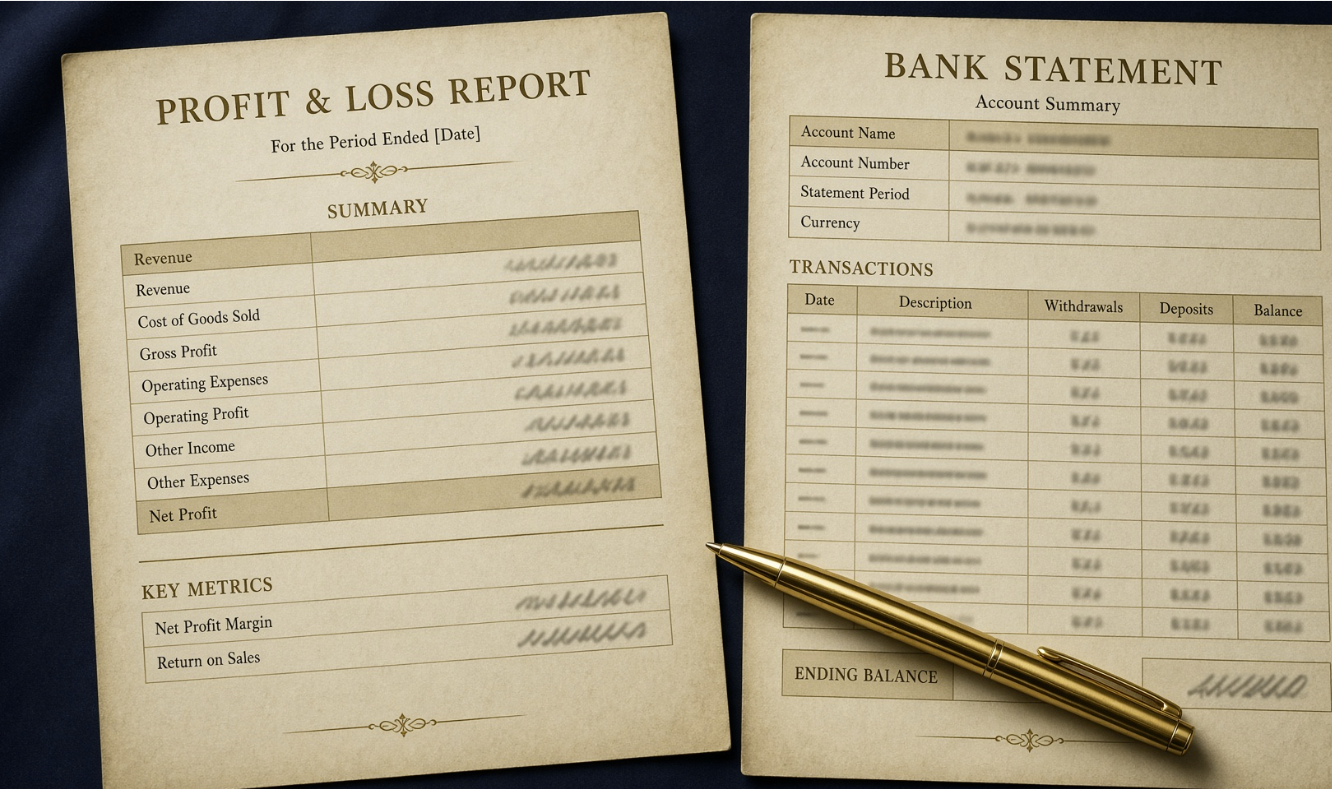
Using profit instead of cash
Revenue is cash when it clears. Costs are cash when they leave the account.
Optimistic timing
If in doubt, push inflows later and pull outflows earlier. Being pleasantly surprised is better than the reverse.
Only opening the file when you’re already tight
The value is the early warning. You only get it if you look.
Making it too complex to maintain
A simple sheet you update beats a model you avoid.
Tools for Cash Flow Forecasting
Start with Sheets or Excel. Templates are fine if you understand each line.
Then use the data you already have. Xero, MYOB or QuickBooks: aged receivables, payables, payroll, recurring costs. Pull reports; don’t rely on memory. Built-in cash tools help with history; they’re weaker at “what if” until you add scenarios yourself.
How This Supports Growth
Defence (avoiding a crunch) matters. So does timing.
A clear cash flow forecast owners can maintain tells you which month a hire or campaign is affordable. It also makes you easier to fund: banks and investors trust an owner who can show the next 90 days, not a scramble.
It also cuts the background noise of not knowing.
Financial clarity isn’t only good for the business. It’s good for the person running it.
Days 1–2: Bank balances, aged receivables and payables, last three months of statements, list every recurring outflow.
Day 3: Structure the sheet (monthly to start, or 13 weeks).
Day 4: Confirmed numbers first, then honest estimates.
Day 5: Stress test. Note anything that needs action this month.
From week 2: Update every Monday. Stay 90 days ahead.
No special software required. Honest numbers, updated often.
Good cash flow planning is not a perfect prediction. It’s a clear enough picture of the next quarter that you can move early.
Businesses that grow on purpose usually aren’t just better at making money. They’re better at seeing it.
If you want that forecast built with you — and tied to what’s leaving the business as well as what’s coming in — Bettercosts’ Predictable Profit Planning is the 90-day visibility piece. Pair it with a zero-risk look at outgoings for a complete review and the best way to better planning.
Start the sheet this week. Or book a conversation and build the first 90 days properly.
Join other Albury-Wodonga businesses taking control of their margins
Click to Start Your Recovery Today